
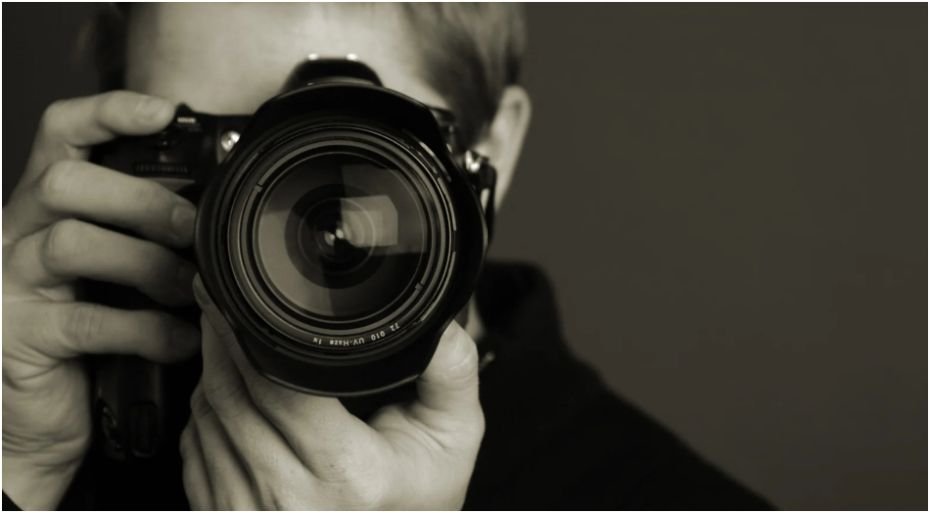
The fastest way I improved my photos was not buying a better lens. It was turning on the grid and stopping myself from putting every subject in the center. These rule of thirds photography tips for beginners will help you frame landscapes, portraits, family photos, and action shots with more purpose.
The rule of thirds is simple. Imagine your frame split into a 3×3 grid with two vertical lines and two horizontal lines. The four places where those lines meet are called power points. Instead of placing your subject dead-center, you place important details along the lines or near the intersections.
That small shift can make a snapshot feel cleaner, stronger, and more professional.
What Is the Rule of Thirds in Photography?

The rule of thirds is a composition method that helps you decide where to place the main subject. It works because it gives the viewer’s eye a clear path through the image.
A centered subject can work, but beginners often overuse it. The result is flat framing, empty headroom, awkward horizons, and photos that feel more accidental than intentional.
When I use the grid, I ask one question before pressing the shutter: “What should the viewer notice first?” Once I know that, I place that subject on a grid line or power point.
For example, if I photograph a person, I usually place the eyes near the top third. If I photograph a sunset, I place the horizon on the lower third when the sky is the main feature. If I photograph a trail, river, or fence, I let that line lead toward one of the power points.
That is why these rule of thirds photography tips for beginners work across almost every type of camera.
Turn On the 3×3 Grid Before You Shoot

Do not guess the thirds in your head. Beginners improve faster when they use the grid overlay every time they shoot.
Most modern cameras and phones include a grid option. Once it is on, the screen gives you a live blueprint. You can see where the subject, horizon, eyes, and background elements fall before you take the photo.
This one setting removes a lot of composition guesswork.
Canon Grid Setup for Beginners
On Canon mirrorless cameras, check the shooting menu for options like “Shooting info. disp.” or “Grid display.” Choose the 3×3 grid if available. This places the rule-of-thirds guide on the LCD screen or electronic viewfinder.
On Canon DSLR models, the option may appear under setup or live view settings. Some DSLR optical viewfinders support viewfinder grid display, while others show the grid only in Live View.
Once the grid is active, use it for two things. First, keep horizons straight. Second, place your subject away from the middle without making the frame feel random.
Smartphone and Editing Grid Tip
Phone photographers should also turn on the camera grid. On iPhone and Android, this option usually appears in camera settings.
If you miss the composition while shooting, fix it later. Cropping tools in apps like Lightroom and basic mobile editors often display a rule-of-thirds grid. I use this to tighten headroom, move the subject onto a power point, or shift a horizon away from the center.
This is also where you can fix many photo composition mistakes beginners make, especially too much empty space and tilted horizons.
Use the Rule of Thirds Grid for Better Landscapes

Landscape photography is where beginners often see the fastest improvement. A centered horizon usually cuts the image in half. The viewer does not know whether to focus on the sky or the land.
The rule of thirds solves that by forcing you to choose a visual priority.
The 2-to-1 Horizon Split
Use the bottom third line when the sky carries the photo. This works for sunsets, storm clouds, dramatic color, or a bold blue sky. The sky gets two-thirds of the frame, and the land supports it.
Use the top third line when the foreground is stronger. This works for wildflowers, rocks, waves, sand patterns, rivers, or textured fields. The ground gets two-thirds of the frame, and the sky becomes the background.
I tested this on a simple park scene with a plain sky and a textured grass foreground. The center-horizon shot looked flat. The top-third horizon shot looked deeper because the foreground had room to lead the eye.
Add a Hero Element to the Power Point
Wide landscapes can look empty without a focal point. A lone tree, cabin, boulder, person on a trail, or bright patch of flowers can become the “hero” element.
Place that hero element near a lower intersection point. This creates depth because the viewer starts in the foreground and then moves through the rest of the scene.
If a river, trail, fence, or mountain ridge appears in the frame, use it as a leading line. Let it enter from the lower corner and move toward a power point. This makes the image feel planned rather than lucky.
Rule of Thirds Portrait Framing Tips
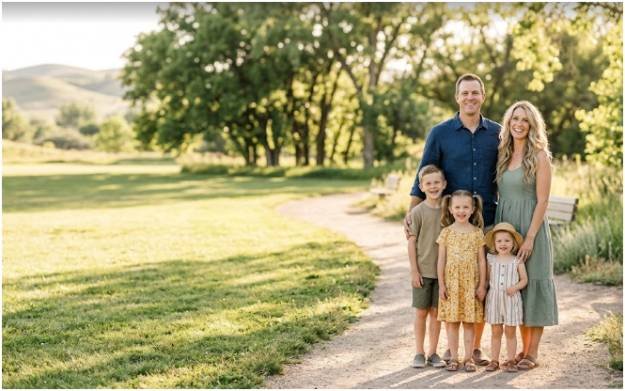
Portraits are where the rule of thirds prevents one of the most common beginner problems: too much empty space above the head.
Place Eyes on the Top Third
When photographing one person, place the eyes along or slightly below the top horizontal third line. For close-up portraits, position the dominant eye near the top-left or top-right intersection.
This small adjustment makes the face feel more important. It also removes wasted headroom and gives the portrait a tighter frame.
For pets, use the same method. Place the eyes on the upper third, especially when the animal is looking toward the camera.
Use Lead Room for Movement and Gaze
Lead room means leaving open space in front of where a subject is looking or moving.
If someone walks from left to right, place them near the left vertical third. Leave open space on the right side. The viewer’s eye naturally follows the movement.
If a child looks toward the left, place the child on the right third and leave space on the left. This gives the portrait breathing room and avoids a cramped feeling.
These rule of thirds photography tips for beginners are especially useful for lifestyle portraits, sports, pets, and candid family photos.
Family Portrait Rule of Thirds Tips
Family portraits can become messy fast. You may have different heights, multiple faces, background distractions, and people standing too stiffly.
The grid gives structure without making the photo feel forced.
Use Vertical Lines for Group Balance
For a single-row family portrait, place the eye line near the top horizontal third. This keeps the frame clean and removes dead space above heads.
For a small family or couple, try placing the group along one vertical third. Leave the other two-thirds open to show the setting, such as a beach, park, porch, or rustic wall. This creates a lifestyle feel instead of a basic lineup.
For larger families, use the vertical grid lines as anchors. Place the outer edges of the group near the left and right thirds. Taller family members can act like visual pillars. The central family members then sit naturally in the middle.
Shift Focus Away From the Center
Off-center framing creates one technical problem. Many beginners focus on the center, then accidentally focus on the background instead of the faces.
On Canon cameras, use focus-and-recompose for still subjects. Aim the center focus point at the eyes, half-press the shutter, reframe with the grid, then shoot.
For families, Zone AF or Large Zone AF often works better. Move the focus zone upward and over the faces. This keeps the eyes sharp while allowing you to keep the group on the rule-of-thirds grid.
When to Break the Rule of Thirds
The rule of thirds is not a law. It is a starting point.
Break it when symmetry is the point of the photo. Reflections, tunnels, staircases, bridges, and centered architecture often look stronger with the subject in the middle.
Break it for intense portraits too. A centered face can feel bold, direct, and dramatic when the expression fills the frame.
The trick is intention. Centering is not wrong. Accidental centering is the problem.
FAQs
1. What is the rule of thirds in simple words?
It means dividing your photo into a 3×3 grid and placing key subjects on the lines or intersections.
2. Is the rule of thirds good for portraits?
Yes, place the eyes near the top third line to reduce empty headroom and create stronger framing.
3. How do beginners use the rule of thirds in landscapes?
Place the horizon on the top or bottom third, depending on whether the land or sky is more interesting.
4. Can I break the rule of thirds?
Yes, break it for symmetry, reflections, bold centered portraits, or any shot where center placement feels intentional.
Final Frame: Stop Centering Everything
I like the rule of thirds because it gives beginners an instant decision-making system. Instead of wondering where everything should go, I use the grid to choose the subject, place the horizon, control empty space, and guide the viewer’s eye.
Start with one habit: turn on your 3×3 grid and shoot ten photos without placing the main subject in the center. Compare those shots with your older photos. You will see the difference fast.
The camera did not get smarter. Your framing did.