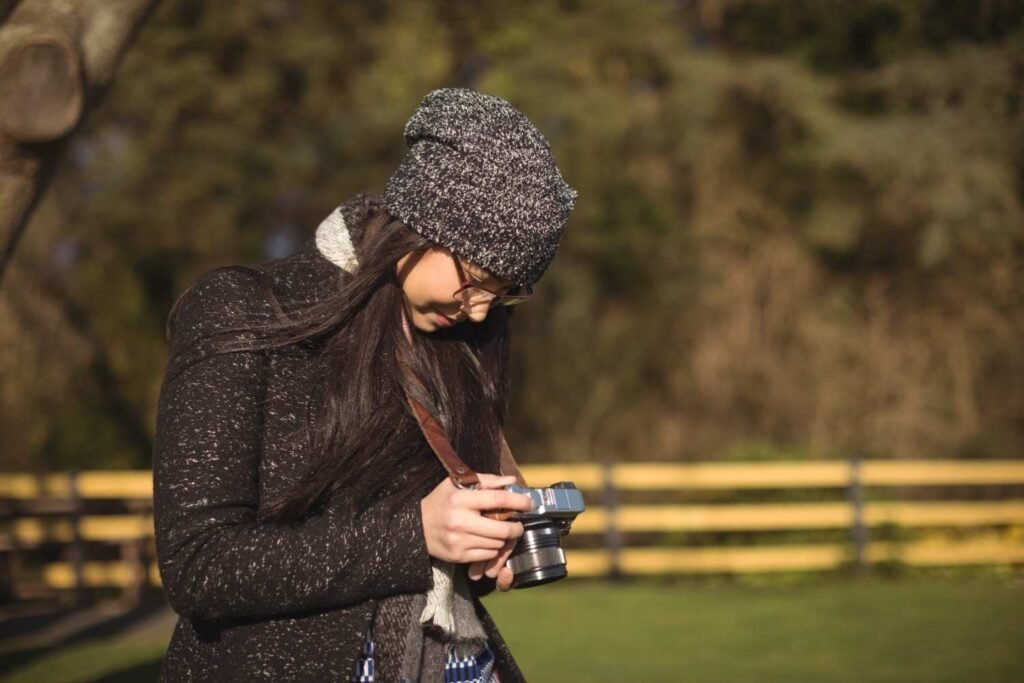
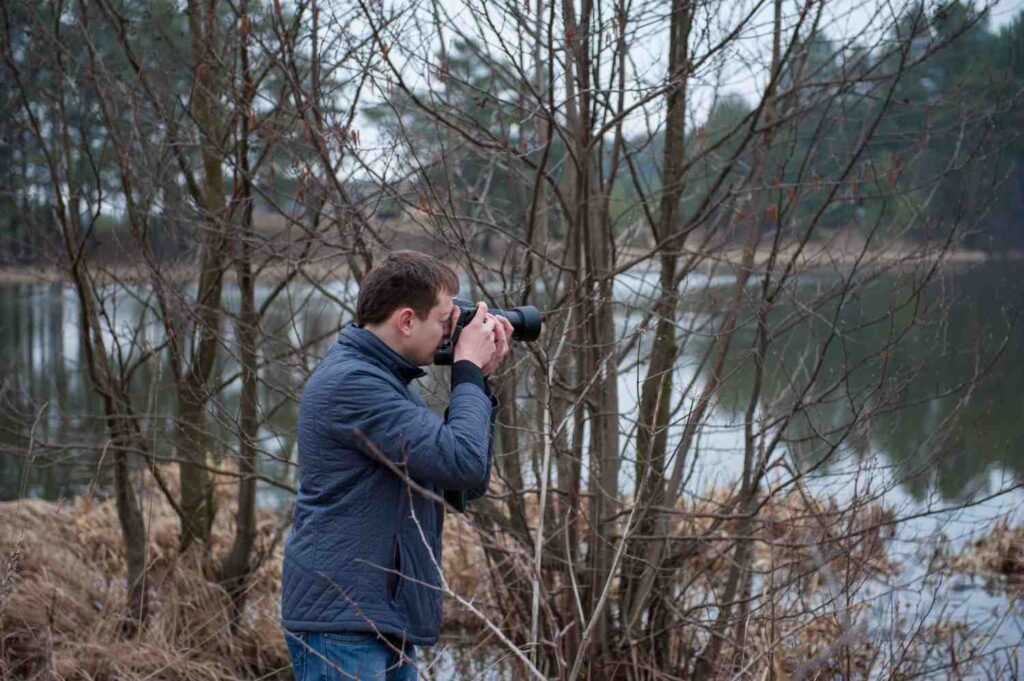
Wind can ruin an otherwise perfect outdoor photo faster than almost any other weather condition. I have seen technically correct exposures come back soft simply because the tripod vibrated, a camera strap flapped against the body, or flowers moved during the exposure.
Learning how to take sharp photos in windy conditions starts with recognizing that wind creates two different problems: camera shake and subject movement. Camera shake happens when the camera, lens, or tripod vibrates.
Subject movement happens when grass, trees, flowers, clothing, or hair shifts while the shutter is open. Once I identify which type of blur I am fighting, choosing the right settings becomes much easier.
What Shutter Speed Should You Use in Strong Wind?
Shutter speed is usually the first setting I change.
For moving flowers, leaves, grasses, or people, 1/500 second is a useful starting point. In stronger gusts, I may move toward 1/800 or 1/1000 second. Telephoto photography often requires even faster shutter speeds because long focal lengths magnify small vibrations.
I do not treat 1/500 second as a universal rule. A relatively still landscape may need less speed, while rapidly moving branches could need considerably more.
The important point is to inspect the image at high magnification instead of assuming the tripod guarantees sharpness.
Should You Increase ISO When Photographing in Wind?
Yes, when a higher ISO allows me to protect shutter speed.
Many landscape photographers instinctively try to stay at ISO 100. That makes sense in calm conditions, but wind changes the priority. I would rather capture a sharp photograph at ISO 400 or 800 than a perfectly clean but visibly blurred image at ISO 100.
Modern cameras generally give photographers considerable flexibility at moderate ISO settings. Noise reduction software can also handle grain much more effectively than it can repair motion blur.
I set the aperture for the depth of field I need, choose a shutter speed fast enough to control movement, and then raise ISO as necessary to complete the exposure.
How Do You Stabilize a Tripod in Wind?
A tripod should be configured differently when conditions become gusty.
I lower it whenever possible because a short tripod creates a more stable platform and exposes less equipment to direct wind. I also keep the center column fully lowered whenever the composition allows it. Raising the center column increases leverage and can make the camera more vulnerable to vibration.
When extending the legs, I use the thickest sections first. I leave the thinnest lower sections collapsed unless I genuinely need the additional height.
The tripod feet also need firm contact with the ground. Loose soil, beach sand, gravel, and uneven terrain can allow movement even when the tripod itself feels sturdy.
Should You Hang a Camera Bag From Your Tripod?
This common photography trick requires caution.
Extra weight can increase stability, but a freely hanging camera bag can become a pendulum. Strong wind pushes the bag back and forth, transferring movement into the tripod.
If I add weight, I secure it so it cannot swing. A low-profile stone bag attached between the legs is usually safer than a freely dangling backpack. If a bag hangs from the center hook, allowing part of it to rest on the ground can also reduce movement.
Should Image Stabilization Stay On When Using a Tripod?
Traditional photography advice often recommends turning image stabilization off whenever a tripod is used, but windy conditions are more complicated.
A tripod can still experience micro-vibrations during powerful gusts. With modern optical stabilization or in-body image stabilization, I sometimes magnify the live-view image and compare the frame with stabilization on and off.
If IBIS or OIS visibly settles the image, I leave it enabled. If the system seems to introduce movement, I disable it.
Camera and lens behavior varies, so manufacturer recommendations remain worth checking.
How Can You Reduce Wind Drag Around the Camera?
Small accessories can create surprisingly large problems.
A loose camera strap catches wind easily and transfers vibration straight into the camera body. I remove it when practical or secure it tightly around the tripod. An elastic band or hair tie can also keep a strap from flapping.
Lens straps, remote cables, and other dangling accessories deserve the same attention.
I also position myself upwind whenever possible and use my body as a windbreak. A jacket can provide additional shielding when conditions become particularly harsh. Rocks, walls, buildings, vehicles, and other solid structures can also protect the camera from direct gusts.
Does Burst Mode Produce Sharper Photos in Wind?
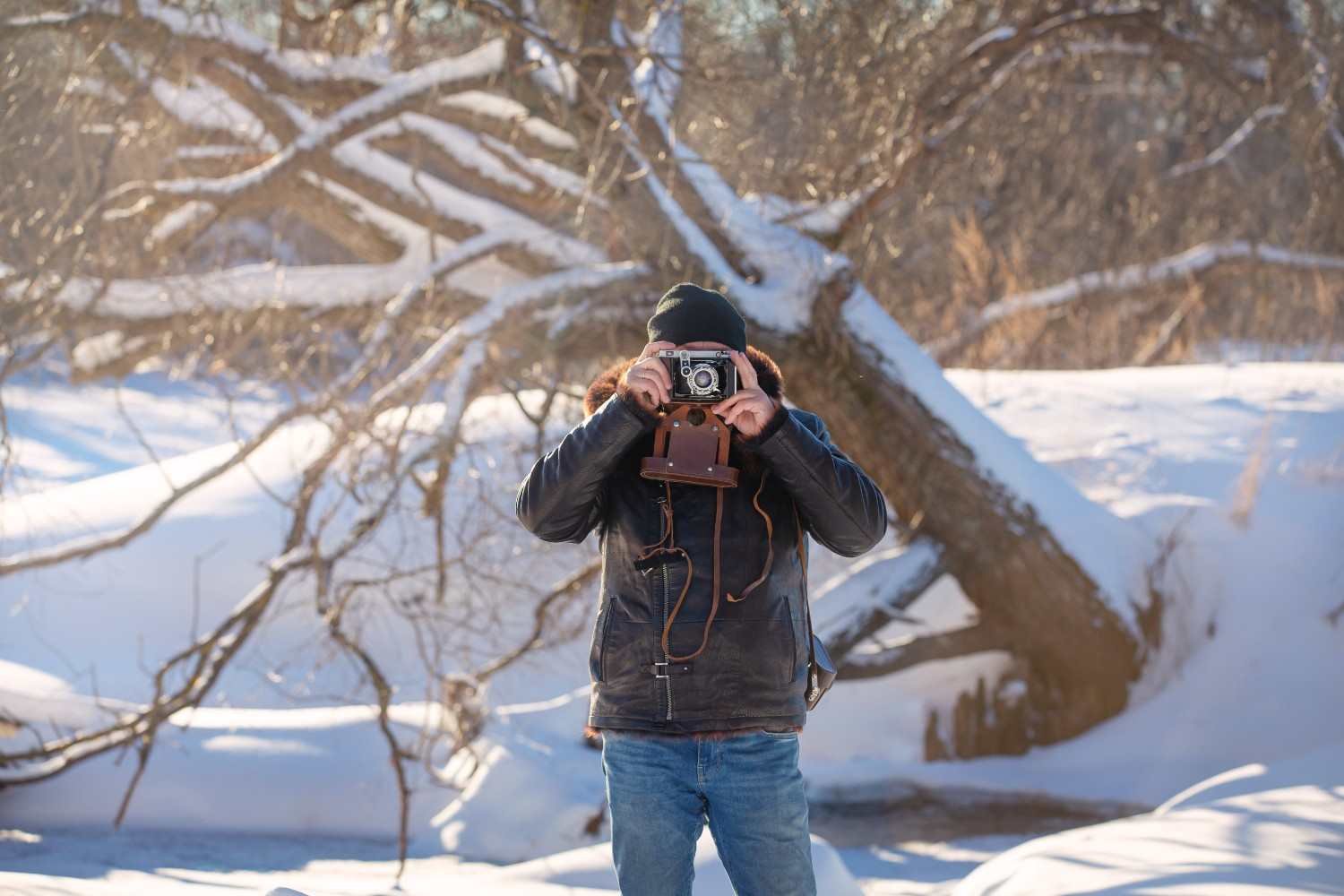
Burst mode can significantly increase the odds of capturing a sharp frame.
Wind rarely blows at perfectly consistent strength. Gusts rise and fall from moment to moment. I often capture a sequence of four or five frames rather than relying on one exposure.
When I review them afterward, one frame is frequently sharper because it landed during a fraction of a second when the wind weakened.
Continuous shooting is especially useful for flowers, foliage, outdoor portraits, and wildlife.
How Should You Focus When Subjects Are Moving?
Continuous autofocus can help when subjects sway unpredictably.
For flowers, people, or wildlife moving back and forth, I usually choose continuous AF so the camera can update focus between frames. For distant landscapes where the focal plane is not changing significantly, single autofocus or manual focus may be more reliable.
Aperture matters too. Shooting extremely wide open creates a thin depth of field that leaves little margin for subject movement. When light allows, stopping down slightly can increase the zone that appears acceptably sharp.
Should You Avoid HDR Bracketing in Wind?
Wind can make exposure bracketing difficult.
When several bracketed frames are captured, tree branches, leaves, grasses, clouds, and other moving elements may occupy different positions in each photograph. Combining those exposures can produce ghosting and awkward edges.
When possible, I prefer a single well-exposed RAW file in rapidly changing conditions. Modern sensors often retain enough highlight and shadow detail to recover substantial dynamic range without blending several wind-affected images.
Can You Shoot Long Exposures in Strong Wind?
Yes, but the goal changes.
A long exposure may intentionally blur moving clouds, waves, grasses, or foliage while keeping stationary objects sharp. The creative motion can make wind part of the photograph rather than something I need to eliminate.
Camera stability still matters. I lower the tripod, secure loose accessories, shield the equipment from gusts, and use a remote release or a two-second timer so pressing the shutter does not introduce extra vibration.
Waiting for a brief lull between strong gusts can also make the difference between a sharp frame and a soft one.
What Are the Best Camera Settings for Windy Photography?
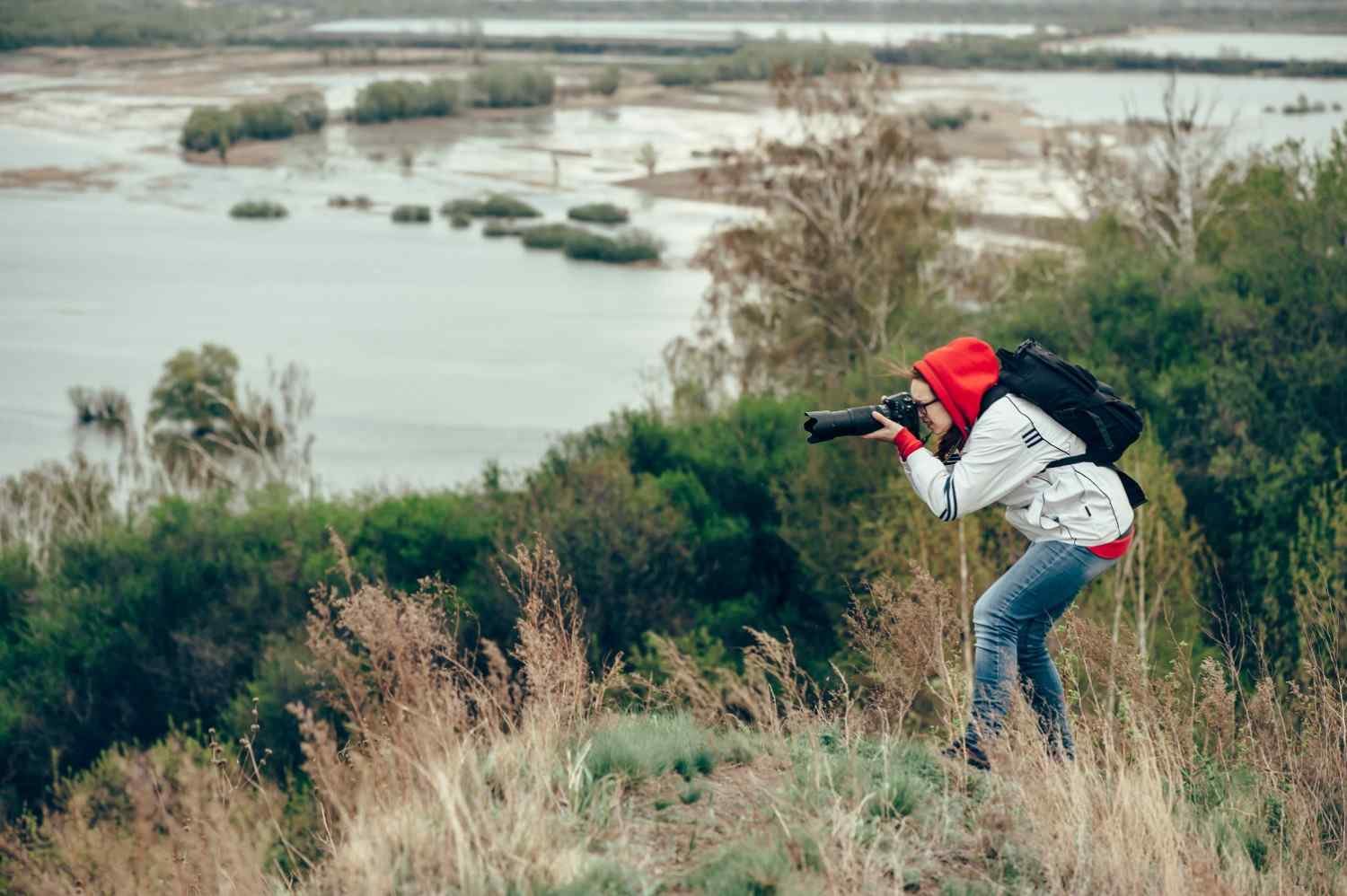
There is no single perfect combination, but I prioritize shutter speed. For visible subject movement, I often begin around 1/500 second and adjust from there.
For landscapes, apertures around f/8 to f/11 frequently provide useful depth of field. I then raise ISO enough to maintain the shutter speed I need.
With long lenses, I become even more conservative. If I am shooting at 400mm in strong wind, for example, 1/800 second or faster may produce more reliable results than following the traditional reciprocal shutter-speed rule.
Frequently Asked Questions (FAQs)
1. Why are my tripod photos blurry when it is windy?
Wind can vibrate the tripod, camera body, or lens even when everything appears stable. Moving subjects can also blur independently of the camera, so faster shutter speeds may still be necessary.
2. Is 1/500 second fast enough for windy photography?
It is a useful starting point for many moving outdoor subjects, but stronger gusts, telephoto lenses, or fast-moving vegetation may require 1/800, 1/1000 second, or faster.
3. Should I press down on my tripod during an exposure?
Gentle downward pressure may sometimes increase stability, but touching the setup can also introduce vibration. Test the technique carefully and use a remote shutter or timer whenever possible.
4. Should I remove the camera strap in strong wind?
Removing it is often the safest option. If that is inconvenient, secure it firmly so it cannot flap or pull against the camera.
5. What is the easiest way to take sharper photos on windy days?
When I need techniques to take sharp photos in windy conditions that work quickly, I start by increasing shutter speed, raising ISO if necessary, lowering the tripod, securing loose accessories, and shooting short bursts.
Final Thoughts
Wind does not automatically mean I have to accept blurry photographs. Most problems improve once I separate camera vibration from subject movement and treat each one differently.
For me, how to take sharp photos in windy conditions comes down to prioritizing shutter speed, stabilizing the tripod intelligently, controlling wind drag, using ISO without fear, and timing exposures between gusts. Many of the same habits also connect well with photography tips for small backyard portraits, especially when wind is moving hair, clothing, plants, or lightweight backgrounds.
Those adjustments make outdoor photography much more predictable, whether I am photographing a Rocky Mountain landscape, an Atlantic coastline, or flowers moving in my backyard.