
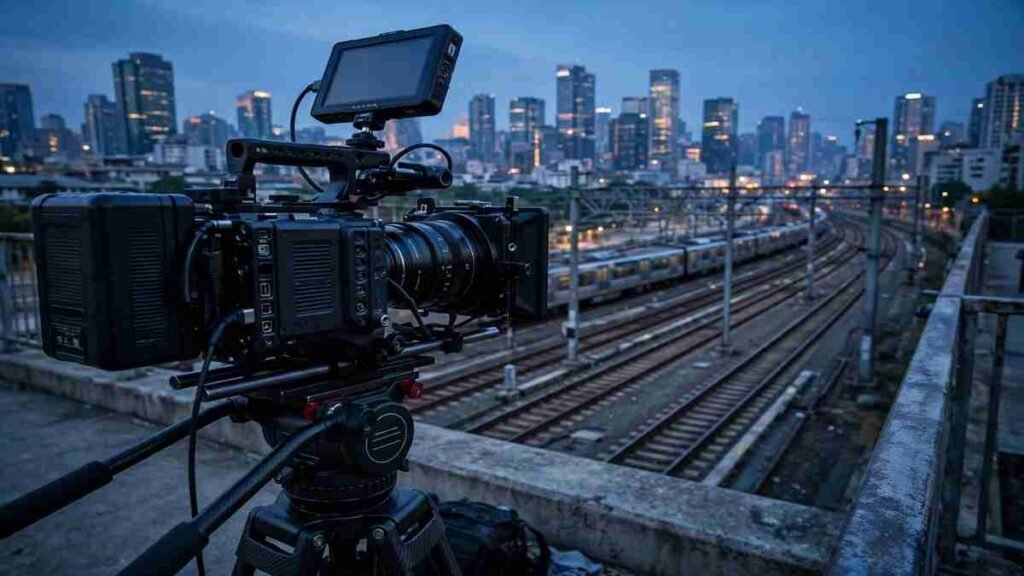
When I think about how to price stock video footage for licensing, I start with what the buyer plans to do with the clip. A company that wants eight seconds of footage for its website needs a different license from an agency that wants the same shot for a paid campaign and asks me to keep it away from competitors.
My starting point is simple. Compare similar clips, define the rights, and calculate what the deal would pay after any platform share. Below, I’ll use one clip to show how the numbers change across three licensing scenarios.
Set a Base Price With Comparable Footage
Find five to ten clips a buyer could realistically use in place of yours. Compare the subject, location, camera angle, resolution, and release status. Look at the rights included in each listing. A subscription download, a one-off purchase, and a custom license can give the buyer different permissions.
Imagine you have an eight-second 4K shot of a downtown train arriving at dusk. An editor looking for generic transit footage may have dozens of substitutes. An editor who needs that exact station before a major renovation may have only a few. Grade, stabilization, and resolution can help a clip stand out, but how easily the buyer can replace the shot often tells you more about what it’s worth.
When deciding how to price stock video footage for licensing, record the middle of your comparable price range, then write down what would justify going higher or lower. Revisit that decision as you collect actual sales and quote responses.
Choose How to Charge for Stock Footage
Charge per clip for a standard marketplace license
A per-clip price works well when buyers can choose a file and accept a predefined license at checkout. If a marketplace sale credits a $100 royalty base and your contributor share is 30%, your payout is $30. A 40% share would pay $40 on the same base. Use the platform’s royalty calculation when estimating earnings, since the credited amount can differ from the public listing price.
Charge per second for selected excerpts
Per-second pricing works when a buyer needs a specific excerpt, as often happens with archival footage. Say a documentary editor needs eight seconds and you quote an illustrative rate of $25 per second with a 10-second billing minimum. The license fee is $250. State whether the minimum applies per clip or across the whole project, and whether you bill for seconds delivered or seconds used.
Give a custom quote when the buyer needs specific rights
Ask where the footage will appear, how long it will run, which markets the campaign targets, and whether the buyer wants exclusivity. Website use, organic social posts, paid ads, streaming, and broadcast are distinct uses you can spell out in the quote. Confirm that any necessary permissions cover the intended use before offering the license.
See How One Clip Can Carry Three Different Prices
These dollar amounts illustrate how to structure an offer. Assume you can license the train clip for each use and that you are comparing three independent scenarios.
- Marketplace sale. The train clip has a $100 royalty base under a standard, non-exclusive license. At a 30% contributor share, you receive $30.
- Direct website license. You quote $200 for one company website for 12 months, with worldwide website access and non-exclusive use. You retain the ability to license the clip to other buyers.
- Exclusive advertising license. You quote $850 for six months of paid social and streaming ads in the client’s domestic market, with exclusivity limited to competing rail operators. The fee reflects both the paid distribution and the licensing opportunities you give up during those six months.
The difference becomes easier to explain when you can name what the buyer gets at each price. If the agency has a smaller budget, you could shorten the exclusivity period or remove streaming from the quote and recalculate the fee.
Put the Fee and Usage Rights in Writing

A written quote makes it easier for the buyer to approve a price and for both sides to handle changes. For the website deal above, the quote could read like this:
If you’re using this quote to budget for a commercial photo shoot, list the $200 stock footage license as a separate line item. The fee includes delivery of clip TR-014, an eight-second 4K ProRes file, and covers non-exclusive use on one company website, accessible worldwide, for 12 months from first publication. Paid advertising, social media, broadcast, renewals, and additional uses require a separate quote.
For larger deals, identify the company receiving the rights and define any exclusive territory, term, and category. If the buyer wants a custom export or restoration, itemize that work alongside the usage fee. This is the step that makes how to price stock video footage for licensing practical. When a campaign expands, the original quote tells you what to reprice.
Frequently Asked Questions
1. How should beginners decide how to price stock video footage for licensing?
Start with similar clips and match the license scope as closely as possible. Pick a starting price, calculate your expected payout, and track how buyers respond before adjusting it.
2. Can royalty-free footage have an upfront fee?
Yes. A buyer can pay an upfront fee to use the clip under the agreed terms without paying a royalty for each permitted use. Check the license for restrictions.
3. Does 4K footage always justify a higher price?
4K can justify a premium when a buyer needs cropping room, reframing, or a 4K master. Rarity, clearance, and suitability for the project can matter more than resolution alone.
4. How much extra should I charge for exclusivity?
Estimate the sales you could give up during the restriction. Ask which competitors, markets, and channels the buyer needs covered, then price that specific scope.
What I’d Quote First
I’d start with a fee for the exact use the buyer described. If they’re deciding between a website launch and a paid campaign, I’d give them two quotes so they can see what each budget buys. I’d also keep a record of what was accepted, which rights were included, and what I earned. Those deals give me a better basis for pricing the next clip.