

Scrolling through endless posts has become second nature for most of us. Some visuals instantly grab attention, while others disappear without a second glance. Learning how to create a visual content marketing strategy helps brands cut through the noise, connect with audiences, and turn visual assets into meaningful business results. The difference is rarely the design itself. It is usually the strategy behind it.
Key Takeaways
- A visual content marketing strategy starts with clear goals and audience insights.
- Consistent branding improves recognition and trust across channels.
- Different visual formats serve different marketing objectives.
- Content calendars help maintain consistency and engagement.
- Performance tracking and testing drive continuous improvement.
Define Goals And Know Your Audience
A successful strategy begins with clarity. Before creating graphics, videos, infographics, or social media visuals, determine exactly what success looks like. Strong visual marketing supports business objectives rather than simply filling a content calendar.
Set Objectives That Matter
Every visual asset should have a purpose.
Some brands focus on increasing brand awareness through social media engagement. Others prioritize website traffic, lead generation, customer retention, or conversions. Defining goals early helps shape content decisions and measurement strategies.
Clear objectives also ensure every visual contributes to a larger digital marketing plan instead of functioning as isolated content.
Build Detailed Buyer Personas
Understanding your audience is essential for creating content that resonates.
Research demographic information, interests, online behavior, challenges, and motivations. Identify where your audience spends time and which visual formats they prefer consuming.
The more specific your audience insights become, the easier it is to create compelling visual storytelling that feels relevant and valuable.
Understand Visual Preferences
Different audiences respond differently to content formats.
Professionals may engage with data visualizations and LinkedIn carousels, while younger audiences often prefer short-form videos and interactive content. Matching content formats with audience preferences improves engagement and user experience.
Create A Memorable Visual Identity
Strong branding makes visual content instantly recognizable.
Without consistency, even high-quality content can feel disconnected and forgettable. A cohesive visual identity creates familiarity and reinforces brand trust across every customer touchpoint.
Create Brand Guidelines
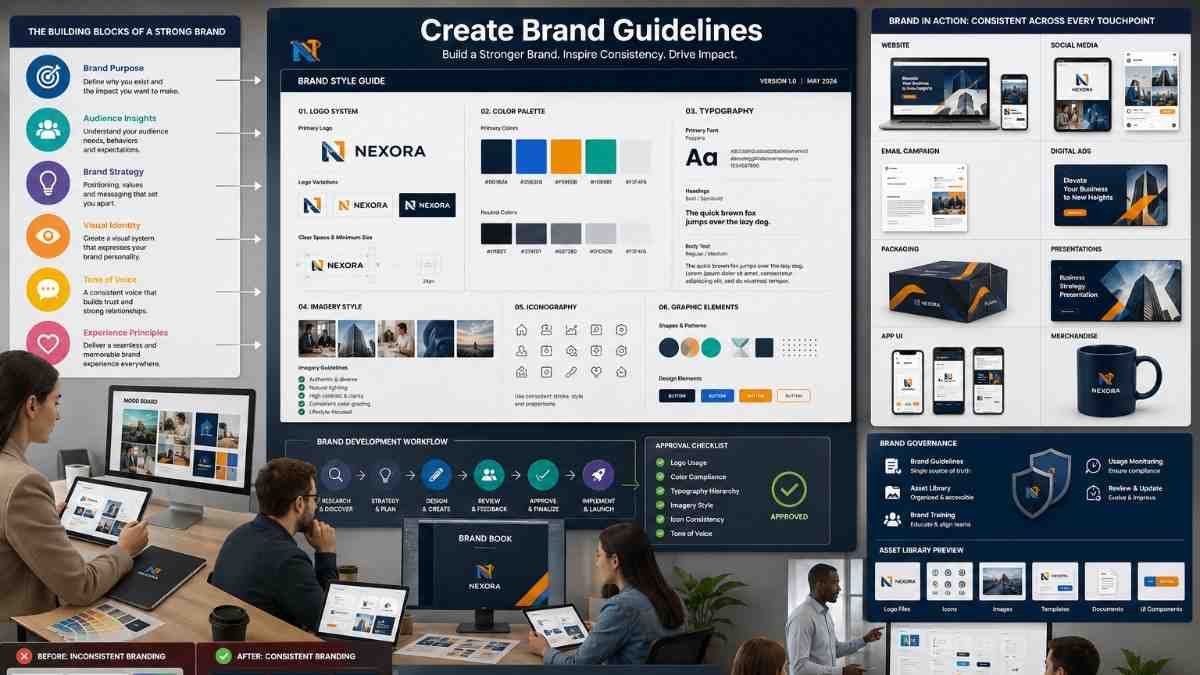
Brand guidelines serve as the foundation of visual consistency.
Establish approved colors, typography, imagery styles, logo placement rules, and graphic elements. These guidelines ensure every visual asset aligns with your overall brand image.
Consistency strengthens brand recall and improves audience recognition over time.
Choose The Right Design Tools
The tools you use can streamline content creation.
Platforms like Canva help maintain brand kits and simplify collaboration, while Adobe Creative Cloud offers greater customization and professional design capabilities.
Selecting tools that match your team’s workflow helps maintain quality and efficiency as content production scales.
Develop A Distinct Visual Language
Visual language goes beyond logos and colors. It includes the emotions, tone, imagery style, and storytelling approach that define how your brand communicates visually. A strong visual brand language creates a consistent experience across all marketing channels.
Select The Best Visual Formats
Different marketing goals require different content types.
Choosing the right formats ensures your message reaches audiences in the most effective way possible while supporting broader content marketing objectives.
Use Short-Form Video
Short-form video remains one of the most powerful engagement tools available.
Platforms such as Instagram Reels, YouTube Shorts, and TikTok make it easier for brands to capture attention quickly and build authentic audience connections.
These videos are particularly effective during the awareness stage of the customer journey.
Create Infographics And Charts
Complex information becomes easier to understand through visual presentation.
Infographics, charts, and data visualizations transform statistics and research into highly shareable assets. They also support thought leadership initiatives and improve content retention.
These formats work especially well for blogs, LinkedIn content, and industry reports.
Invest In High-Quality Images
Visual quality directly impacts brand perception.
Professional photography, branded graphics, and authentic imagery help establish credibility while making content more engaging. Using real people and real experiences often performs better than generic stock photos.
Plan Content With Purpose
Great content requires consistency. Even the most impressive visuals cannot deliver results if they are published randomly. A structured plan ensures your audience receives relevant content at the right time.
Build A Content Calendar
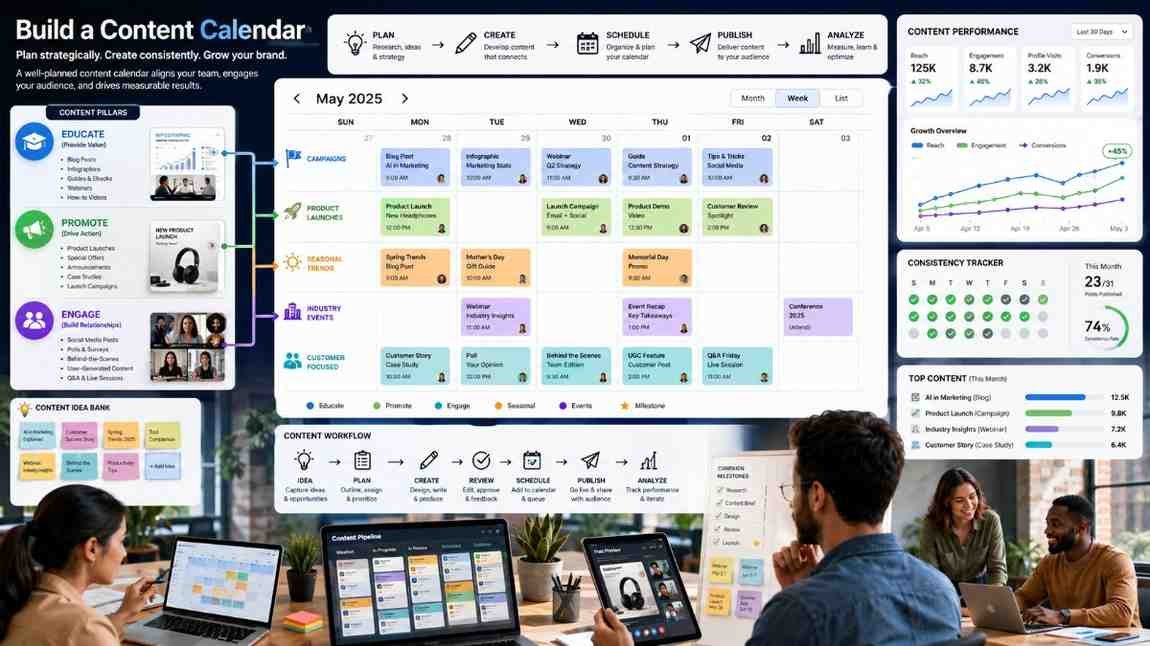
A visual content calendar helps organize publishing schedules. Plan content around campaigns, product launches, seasonal trends, industry events, and customer interests. This approach creates a balanced mix of educational, promotional, and engagement-focused content. Consistency also helps maintain audience expectations and improve brand visibility.
Optimize For Every Platform
Each platform has unique requirements. Visuals designed for Instagram may not perform well on LinkedIn or Pinterest. Consider image dimensions, video length, mobile readability, and platform-specific best practices during content creation. Platform optimization improves reach, engagement, and user experience.
Create A Distribution Strategy
Creating content is only half the process. Successful brands distribute visual assets through multiple channels, including social media, blogs, email marketing, landing pages, and digital advertising. Strategic distribution maximizes visibility and extends content lifespan.
Measure And Improve Performance
The strongest marketing strategies evolve over time. Tracking performance helps identify what works, what needs improvement, and where future opportunities exist.
Monitor Important Metrics
Focus on metrics that align with your objectives. Engagement rates, impressions, shares, click-through rates, conversions, and lead generation data provide valuable insights into content effectiveness. Looking beyond vanity metrics helps reveal the true impact of visual marketing efforts.
Run A/B Tests
Testing helps uncover audience preferences. Experiment with image styles, video lengths, thumbnails, design layouts, and calls to action. Small adjustments often lead to significant improvements in performance. Regular testing creates a culture of continuous optimization.
Measure Visual Content ROI
Effective visual content should support business growth. Analyze how visual assets contribute to revenue, customer acquisition, conversion rates, and retention. Understanding return on investment helps justify future content marketing initiatives and budget allocation.
How To Create A Visual Content Marketing Strategy In Real Life
Many businesses struggle because they treat visual content as a design task rather than a marketing system.

To understand how to create a visual content marketing strategy effectively, begin by defining measurable goals and researching your audience. Next, establish brand guidelines that ensure consistency across channels.
Choose visual formats that align with customer preferences and business objectives. Create a content calendar that supports ongoing campaigns and audience engagement.
After publishing, monitor key performance metrics and continuously refine your approach through testing. The most successful brands combine creativity with data-driven decision-making to build visual content ecosystems that drive awareness, engagement, leads, and long-term loyalty.
Frequently Asked Questions
1. How To Build Visual Content Marketing Strategies?
Start by identifying business goals, understanding audience needs, establishing brand guidelines, selecting suitable visual formats, creating a publishing schedule, and measuring performance regularly to optimize future content decisions.
2. What Is The 3-3-3 Rule For Marketing?
The 3-3-3 rule commonly refers to focusing on three audience segments, publishing across three key channels, and maintaining three consistent content themes to improve clarity and marketing effectiveness.
3. What Are The 5 C’s Of Content Marketing?
The 5 C’s are Clarity, Consistency, Creativity, Credibility, and Customer Focus. Together, they help marketers create valuable content experiences that attract, engage, and retain audiences.
4. What Is The 70 20 10 Rule In Content?
The 70 20 10 rule recommends dedicating 70% of content to proven strategies, 20% to optimized variations, and 10% to experimental ideas that encourage innovation and future growth.
Your Visual Marketing Glow-Up Starts Here
Mastering how to create a visual content marketing strategy is about much more than producing attractive graphics. It requires clear goals, audience understanding, strong branding, strategic planning, smart distribution, and ongoing optimization.
When visual content aligns with business objectives and customer needs, it becomes a powerful growth engine that increases visibility, strengthens trust, improves engagement, and helps brands stand out in an increasingly competitive digital landscape.