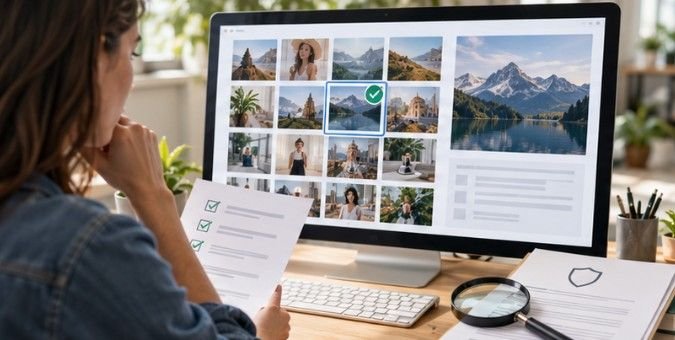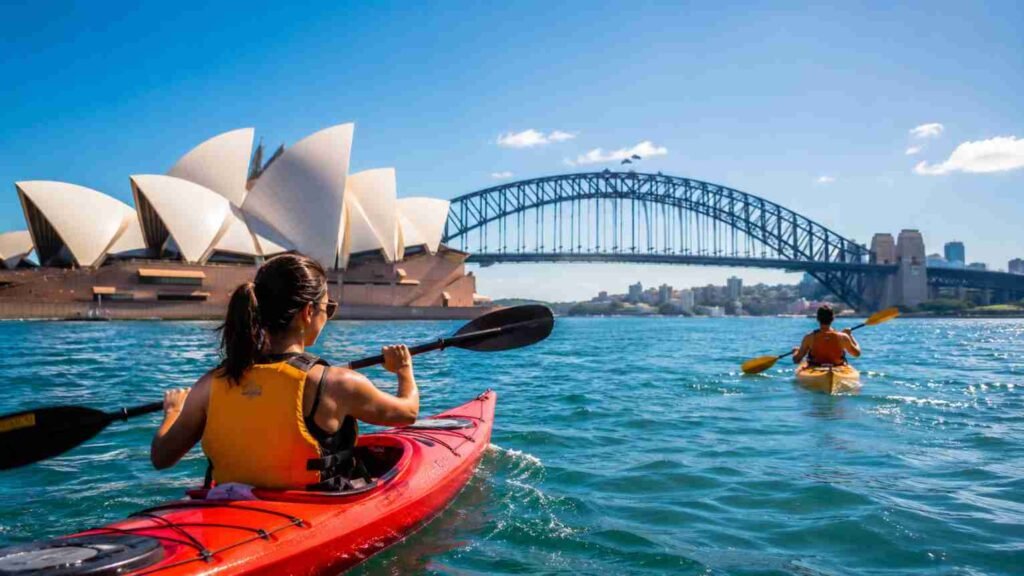
A beautiful photo can still fail a brand campaign for a surprisingly mundane reason: the file is too small, the product label is unreadable, the creator does not own the image, or the sponsorship disclosure is easy to miss.
That is why micro-influencer photo submission guidelines matter beyond photography skills. Brands need images they can review quickly, publish legally, crop for different placements, and reuse according to agreed licensing terms. For creators, getting those details right can be the difference between becoming a reliable campaign partner and creating extra work for the marketing team.
Why Brands Are Becoming More Specific About Photo Deliverables
Micro-influencers often work with smaller production setups than celebrity creators, but brands still need professional deliverables. A campaign image might eventually appear on Instagram, a retailer page, an email campaign, an editorial article, or paid advertising. One photograph may therefore need to survive several crops and screen sizes.
That changes the definition of a “good photo.” Visual appeal matters, but so do resolution, composition, rights, truthful representation, accessibility, disclosure, and organization. The strongest creator briefs address all of these before shooting begins.
Start With the Campaign Brief, Not Your Camera
Before creating anything, read the brand’s instructions line by line. Look for required orientation, image dimensions, number of photographs, prohibited competitors, product positioning, required props, wardrobe restrictions, caption requirements, submission deadlines, and usage rights. Do not assume that specifications from a previous collaboration apply to the next one.
A skincare company may need close product detail and realistic skin texture. A travel brand may prefer environmental lifestyle photography with considerable negative space. An ecommerce campaign may want an almost catalog-like image.
Creators can also study broader visual content ideas for social media marketing before planning variations, but the individual campaign brief always takes priority.
Technical Standards That Prevent Rejected Submissions
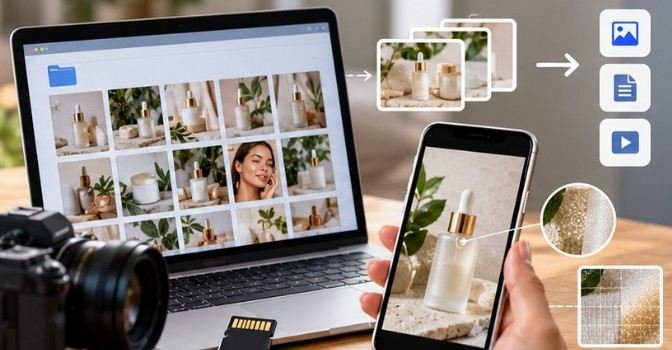
Submit the Largest Clean File Requested
There is no universal rule that every influencer image must be “300 DPI.” DPI becomes particularly relevant when an image is intended for physical printing. For digital publishing, actual pixel dimensions and image quality are generally more useful measures.
It is recommended retaining the highest available resolution rather than artificially rescaling or interpolating digital photographs. Its preferred still-image formats include TIFF, PNG, JPEG2000, and JPEG, illustrating why preserving a strong source file matters even if the final campaign requests a simple JPG.
Unless the brand says otherwise, avoid sending screenshots, images downloaded again from social media, or files repeatedly compressed through messaging apps. Keep the original high-quality export available.
Use Familiar File Formats
JPG is normally a practical option for finished photographic content because it balances quality and file size. PNG may be requested for graphics, transparency, or certain digital assets.
RAW files should usually stay in your archive unless the campaign specifically requests them.
A sensible delivery structure might look like:
Brand_Creator_Campaign_01.jpg
instead of:
IMG_7298_finalnew2.jpg
Clear file names become increasingly important when an agency is sorting hundreds of creator assets.
Build Composition Around How the Brand Will Use the Image
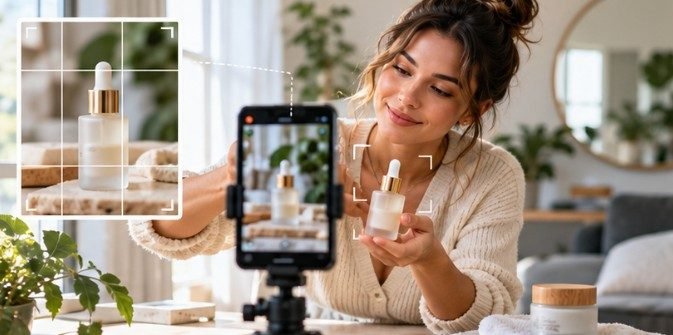
Great influencer photography should feel natural without becoming visually chaotic. Keep important products away from extreme frame edges. Marketing teams may need room to convert a vertical photograph into a square crop, banner, story, or advertisement.
Shoot several variations:
- one clean product-centered frame;
- one wider lifestyle scene;
- one close detail;
- one image featuring the creator using the product naturally.
Neutral backgrounds can be extremely useful when product visibility is the goal, but they are not mandatory. The right background is one that strengthens rather than competes with the subject.
Protect Accurate Product Color
Use soft window light, open shade, or controlled artificial lighting rather than harsh direct flash whenever possible.
Watch highlights on glossy packaging and check whether shadows hide important details. Most importantly, do not push editing so far that the product no longer resembles what buyers will receive.
Strong filters, extreme skin smoothing, aggressive saturation, and artificial color changes may create attractive social content while reducing its usefulness as a commercial asset.
Copyright Permission Needs to Be Settled Before Delivery

Taking possession of an image file does not automatically give a brand unlimited ownership of it. Under U.S. copyright law, photographs can qualify for copyright protection, and the U.S. Copyright Office explains that copyright protection exists once an original photograph is fixed in a tangible form. Registration can provide additional legal benefits.
If somebody else photographed you, clarify who owns the copyright and whether you have permission to license the image to the client. Similarly, obtain appropriate consent before prominently featuring another identifiable person where required. Your agreement should clarify whether the brand receives organic social rights, website usage, email use, paid advertising rights, retailer usage, editing rights, exclusivity, or perpetual licensing.
“Usage rights included” is too vague for valuable content. The Smithsonian’s image-use rules provide a useful reminder of the larger principle: possessing access to an image does not automatically authorize unrestricted commercial reuse.
FTC Disclosures Cannot Be Treated as Decoration
For U.S.-focused collaborations, disclosure is one of the most important parts of the entire process.
The Federal Trade Commission says influencers should disclose a material connection with a brand when that connection could affect how consumers evaluate the endorsement. Payment is not the only trigger; free or discounted products and certain personal or employment relationships can count too. The disclosure should be difficult to miss and easy to understand.
Terms such as “ad” and “sponsored” are clearer than obscure abbreviations. The FTC also cautions against hiding disclosures after a “more” expansion or burying them among unrelated hashtags.
For picture-based formats such as Stories, the FTC specifically recommends superimposing the disclosure where viewers can see and understand it.
Importantly, do not automatically add disclosure text to every master image delivered to a brand. Preserve a clean master unless the campaign requires otherwise, then create properly disclosed publishing versions for placements where disclosure belongs on the visual.
Make Submitted Images Accessible for Future Publishing
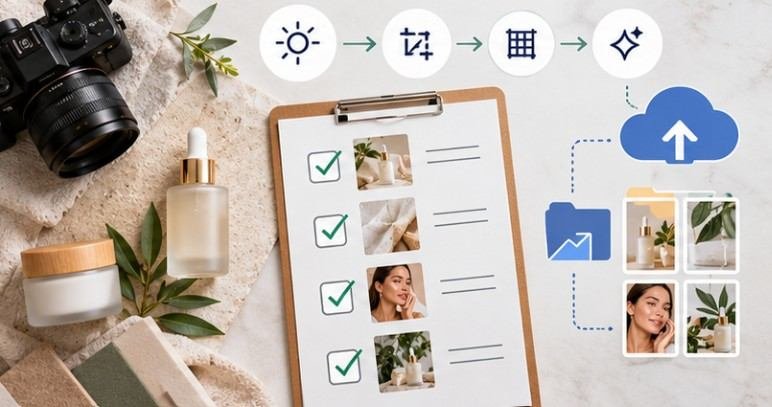
Accessibility is easily overlooked during influencer campaigns. The World Wide Web Consortium explains that informative web images should have text alternatives conveying their relevant information or purpose. Decorative images, by contrast, may use an empty alt attribute.
Creators do not necessarily control the website where a brand ultimately publishes an image, but they can help by supplying a short description with each asset.
For example:
“Creator applying facial moisturizer beside a bathroom window while holding the labeled bottle.” That gives a marketing team useful starting material for alt text, asset management, and editorial descriptions.
Where Guidelines Need Flexibility
Not every brand needs pristine studio photography. Food, fashion, travel, fitness, home, and beauty campaigns often benefit from visual imperfection because audiences respond to content that genuinely resembles the creator’s normal environment.
Likewise, a smartphone image can be perfectly suitable if its technical quality meets the campaign’s requirements.
Professionalism should not be confused with making every photograph sterile. The purpose of guidelines is to eliminate preventable production problems while preserving the creator’s voice.
Frequently Asked Questions
1. What image format should micro-influencers submit?
JPG is commonly practical for finished photography, while PNG may be requested for certain digital assets. Always follow the campaign brief because brands and agencies can specify different requirements.
2. Do influencer photos have to be 300 DPI?
Not necessarily. DPI is especially relevant to print. For digital campaigns, adequate pixel dimensions, sharpness, compression quality, and the brand’s requested specifications matter more.
3. Should #ad appear directly on an influencer photo?
For image-based formats where the endorsement is presented visually, FTC guidance says disclosures should be clear and hard to miss. Requirements depend on how and where the image is published.
4. Can a brand reuse submitted influencer photos forever?
Only if the applicable agreement grants those rights. Creators should review licensing duration, channels, advertising rights, editing permissions, exclusivity, and compensation before approving broad usage.
Make the File as Professional as the Photograph
The best micro-influencer photo submission guidelines do not try to turn creators into commercial photography studios. They eliminate uncertainty.
A brand should know what it can publish. A creator should know what rights are being granted. The audience should understand when content is sponsored. And the image itself should arrive sharp, organized, truthful, and flexible enough for its intended placements.
That is the real standard worth remembering: a successful submission is not merely attractive on a phone screen. It is an asset that can move from creator to marketing team to audience without producing technical, legal, or editorial surprises.