A nearly empty Main Street can look uneventful at first, but that quietness is often where the strongest photographs begin. I pay attention to the details that reveal the identity of the place: an aging storefront, a diner glowing at dusk, long shadows across brick buildings, or one person moving through an otherwise still scene.
That is why photography tips for small-town street scenes need to focus on observation more than action. Small-town America offers fewer crowds, but it gives me more room to work with architecture, local routines, reflections, weather, light, and subtle signs of everyday life.
Once I stop looking for big-city energy, the streets start offering a different kind of story.
What Should You Photograph When a Small Town Feels Empty?
One of the biggest mistakes I made early on was assuming an empty street meant there was nothing to photograph.
Now I look for what I think of as “proof of life.” That might be a faded mural, personalized shop window, handwritten notice, worn bench, vintage theater marquee, flowerpot outside a café, pickup truck parked beside an old storefront, or holiday decorations hanging over Main Street.
These details reveal who lives there and how the town functions.
Architecture also becomes much more important when people are scarce. Historic downtown blocks, brick storefronts, courthouse squares, alleyways, churches, diners, gas stations, and old business signs can all become strong subjects.
On bright sunny days, I sometimes switch my thinking toward high-contrast black-and-white photography. Strong shadows, geometric building lines, and hard light can make a simple corner much more graphic and dramatic.
What Is the Best Time to Photograph Small Town Streets?
Timing matters more in a small town because activity often happens in short bursts.
I like early mornings for quieter documentary photography, especially around cafés, bakeries, and older business districts. Late afternoon and golden hour work beautifully for brick buildings, shop windows, and long shadows.
If I want people in the frame, I plan around when the town actually comes alive. Friday evenings, Saturday farmers markets, county fairs, parades, local festivals, high school sports, holiday events, and community gatherings usually provide more natural interaction.
In many American towns, a street that looks deserted at 2 p.m. on Tuesday can feel completely different during a Friday night game or weekend festival.
Should You Use a Wide Lens or a Telephoto Lens?
Wide-angle lenses such as 28mm and 35mm work well in cities, but I do not automatically use them in quieter towns.
A very wide view can exaggerate empty pavement and make the scene feel more deserted than it really is.
When I want tighter storytelling, I often move toward 50mm, 70mm, 85mm, or even 135mm. Longer focal lengths compress the scene, remove unnecessary empty space, and let me photograph people from across the street without stepping too close.
That does not mean wide lenses are wrong. I still use 35mm when architecture, storefronts, or environmental context matter. I simply choose focal length based on what the scene needs rather than following a fixed street photography rule.
How Do You Build Stronger Compositions on Quiet Streets?
When there are fewer people, composition has to do more work.
I often walk both sides of the street before I begin shooting seriously. Light can look completely different from one sidewalk to the other, and a storefront that seems dull from one direction may become interesting when backlit or reflected in a window.
Layer the Scene
I look for a foreground element, something happening in the middle distance, and an architectural or environmental detail in the background.
A parked car can frame the foreground, a pedestrian can become the middle-ground subject, and an old theater or courthouse can complete the background.
Windows, doorways, fences, porch posts, tree branches, and awnings also create natural frames.
Use Reflections and Negative Space
Store windows are especially useful in older downtown areas. I can combine reflections of buildings or pedestrians with details inside a diner, barber shop, or antique store.
After rain, wet pavement gives me another layer to work with.
Negative space can also become part of the story. A single person crossing a broad, empty street can communicate quietness better than a crowded frame ever could.
What Is the Fishing Technique in Street Photography?
One of my favorite approaches in a small town is what street photographers often call the fishing technique.
Instead of following people around, I find a strong composition first. It might be a colorful doorway, dramatic patch of sunlight, mural, diner window, or architectural corner. Then I wait for the right person, bike, dog walker, or vehicle to enter the frame.
This works especially well in places where photographers stand out. I appear less intrusive because I am already positioned and waiting rather than constantly moving toward strangers.
It also improves composition because I build the image before the decisive moment happens.
How Should You Photograph People in a Small Town?
Small towns offer far less anonymity than big cities. People may notice you immediately, especially if you return to the same streets regularly.
I do not try to pretend I am invisible. I work calmly, keep my body language relaxed, and stay prepared to explain what I am doing.
If someone notices that I photographed them and seems uncomfortable, I would rather be transparent than awkward. I can show them the image, explain that I am photographing local street life, and respect their concerns.
For closer portraits, I usually ask.
Community events make people photography easier because cameras are already common. Farmers markets, fairs, football games, parades, and festivals naturally create situations where people expect photographs to be taken.
What Camera Settings Work Best for Small Town Street Photography?
I usually prioritize shutter speed because people, bicycles, and vehicles can enter an otherwise static scene without warning.
Around 1/250 second is a useful starting point for general walking scenes. I may move toward 1/500 second when subjects are moving faster.
For environmental street scenes, f/5.6 to f/8 often gives me enough depth of field to keep people and surrounding architecture clear.
Auto ISO is useful when I move between sunny streets and shaded storefronts. I would rather accept a little extra digital noise than lose a good moment because my shutter speed dropped too low.
Why Should You Keep Returning to the Same Town?
Repeated visits are one of the biggest advantages of photographing locally.
A familiar Main Street changes with weather, seasons, business activity, construction, decorations, and light. The same storefront can look completely different in summer heat, morning fog, fall color, winter snow, or rain.
Returning also helps me learn patterns. I discover when people gather, which corners receive good evening light, and which businesses create the most interesting visual activity.
Over time, this naturally develops into documentary photography.
How Can You Turn Small Town Street Photography Into a Project?
Rather than collecting unrelated images, I like giving myself a theme.
I might photograph one Main Street through all four seasons, document disappearing business signs, focus on local diners, record historic storefronts, photograph Friday night activity, or follow a downtown area as it changes over several years.
A project gives ordinary scenes purpose.
It also creates a visual record of American communities that may look completely different a decade from now.
What Are the Biggest Small Town Street Photography Mistakes?
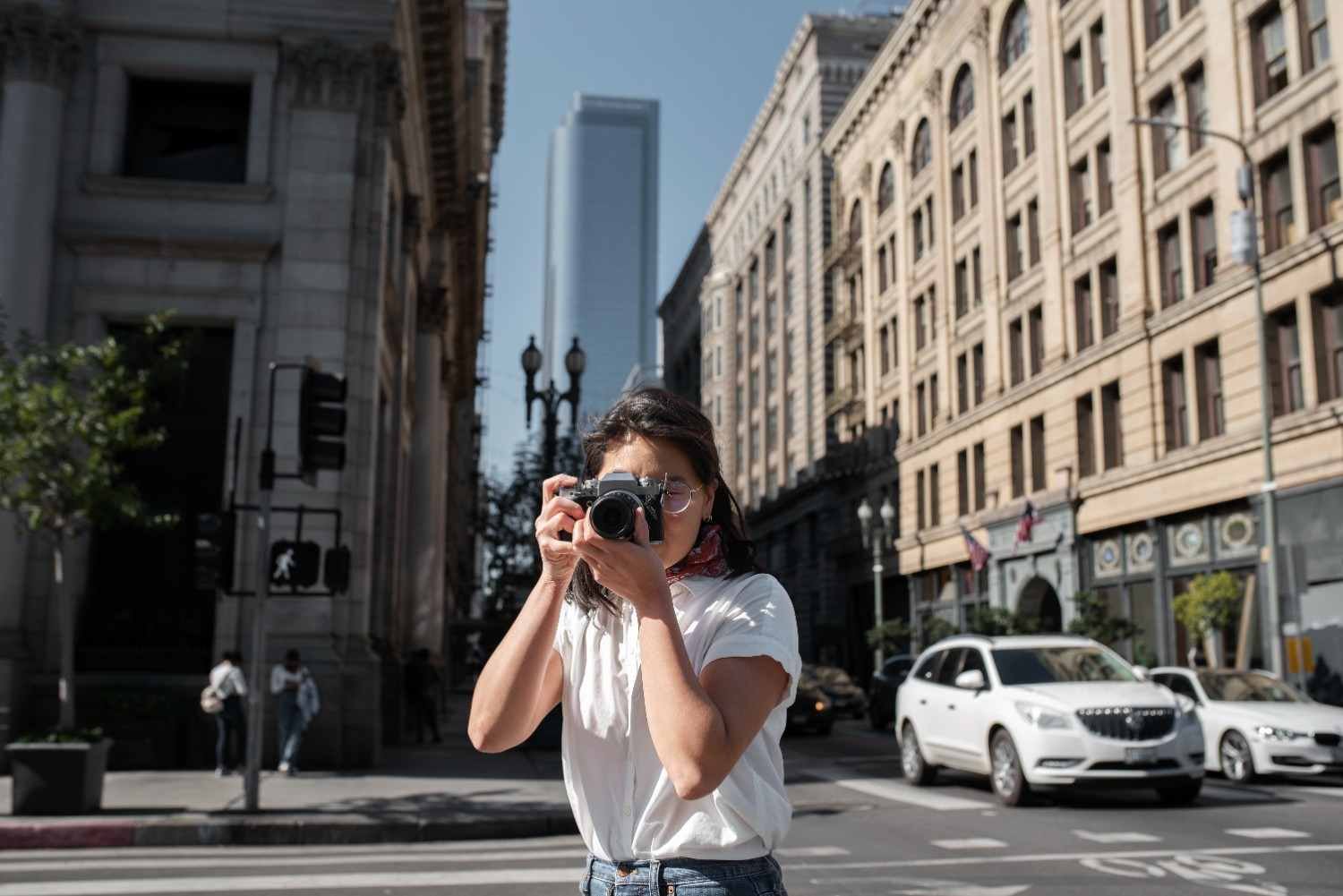
The biggest mistake is trying to make a small town behave like a major city.
I also avoid shooting everything too wide, photographing only at midday, ignoring empty scenes, or assuming that photographs need people to feel meaningful. Many of the same principles found in photography tips for non-professional photographers apply here, especially the importance of slowing down, studying light, and building a deliberate composition before pressing the shutter.
Another mistake is rushing. Quiet places reward observation. Sometimes I spend several minutes watching the way light hits one doorway before anything worth photographing happens.
The strongest small-town photographs often come from slowing down rather than covering more ground.
Frequently Asked Questions (FAQs)
1. What are the best photography tips for small-town street scenes?
I recommend looking for proof of life, photographing local architecture, using longer focal lengths when streets feel too empty, revisiting promising locations, waiting for subjects to enter strong compositions, and planning sessions around community activity.
2. Is a 35mm lens good for small town street photography?
Yes. A 35mm lens works well when you want environmental context, but I also like 50mm to 135mm focal lengths when I need tighter framing or want to reduce space.
3. Can street photography work without people?
Absolutely. Storefronts, architecture, signs, shadows, reflections, vehicles, weather, and small details can all communicate local character without a person in the frame.
4. Should I photograph small towns in black and white?
Black and white can work especially well with strong sunlight, historic architecture, deep shadows, old signage, and simple geometric compositions.
Final Thoughts
Small-town street photography became much more rewarding for me when I stopped searching for big-city energy. Quiet streets offer something different: local history, individuality, slower routines, environmental storytelling, and details that might disappear if nobody bothers to document them.
My most useful photography tips for small-town street scenes are simple: observe before shooting, use the focal length that fits the scene, follow good light, return to familiar locations, respect the people you photograph, and pay attention to signs of everyday life.
When I treat a small town as its own visual world instead of a smaller version of a city, I almost always come home with stronger photographs.